unsorted list of principles and lessons I learned
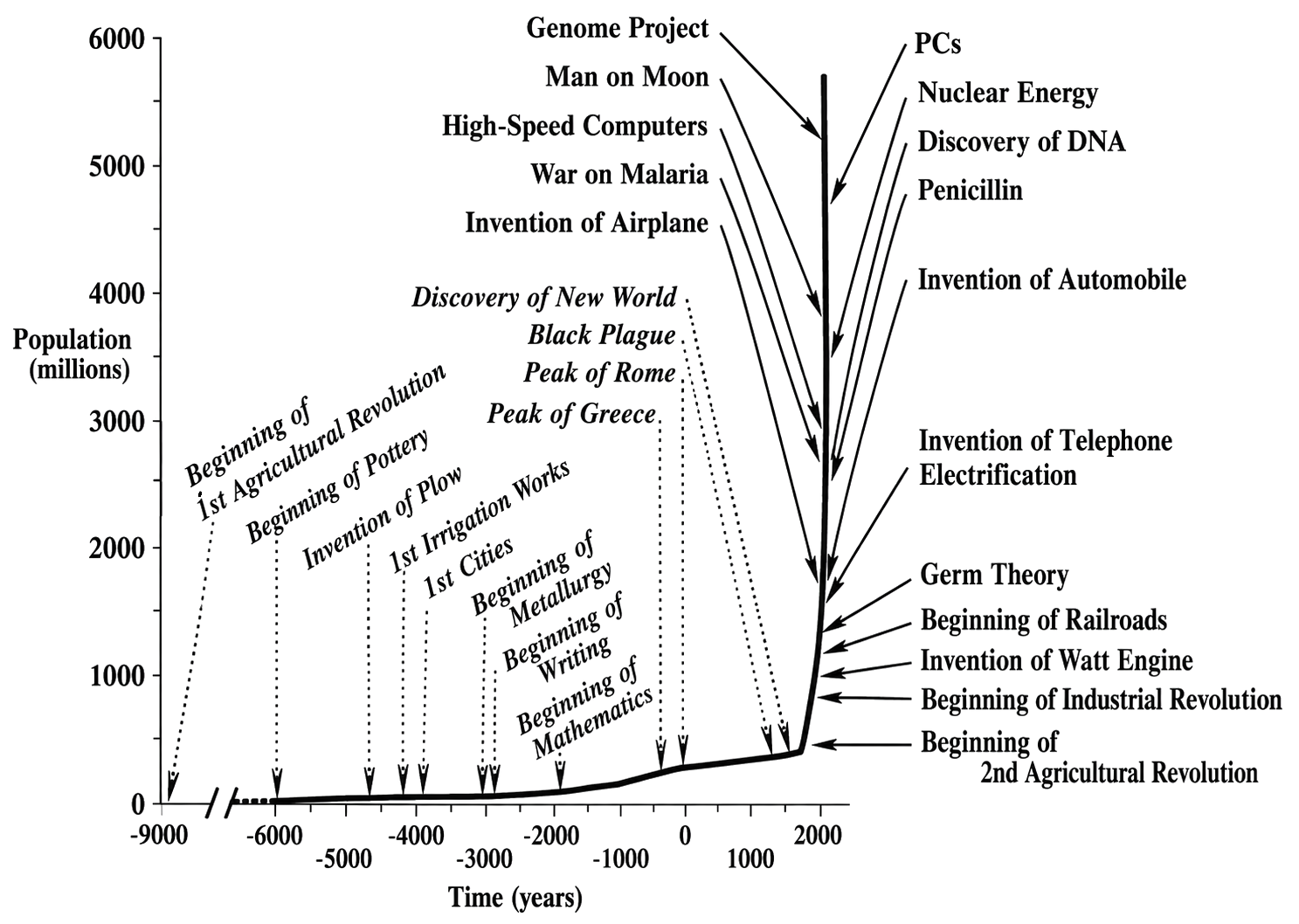
Image credit: ‘Catching Up with the Economy’, inspired by Inherent Labs.
it’s the 3rd of september 2026. I am on a quite long train ride between austria and switzerland. I am nervous because I have a few important decisions to make. I decided to write down a list of principles, ideas, understandings, and lessons that I have learned during my years and have been jumping round in my mind. Hopefully they will help me in present and future decision processes, and might be useful for someone else.
everyone has a flow, find yours.
Our attention, motivation, and neurotransmitters can align in interesting ways and bring us into what people call a “flow state”. Each of us has a personal way of getting there. Find yours. Experiment with 30, 60, or 120 minutes of uninterrupted focus. Play a specific song. Take a few deep breaths. Set a clear goal and create intermediate milestones so that you have a fast feedback loop. Most importantly, just start.
(an interesting reference on using a flow state productively without letting a late start consume your evening: the simple habit that saves my evenings).
think from first principles and build up your understanding.
Ask yourself what is fundamentally true, then build from there. Do not accept claims as facts simply because someone told you they are true. Things should make sense. Question whatever does not, and be willing to change your point of view. Try to see reality as it is, rather than as you want it to be. Unlearn conventional wisdom when necessary.
learn how to do research.
Research is the search through unexplored spaces. It requires heuristics, a highly compressed model of the world (taste), methodological analysis, and the ability to interpolate and extrapolate (creativity). Give yourself room to explore, but follow the “plan” just enough not to lose the thread. Eventually, put the pieces together. Enjoy the journey. Prototype quickly: make things work first, then make them beautiful when you have time. Aim to produce experimental results at least once a day so that your iteration loop stays fast. Think of your search as a graph, and move between nodes using clear, verifiable metrics. Operationalize your hypotheses so that you can test them, make decisions quickly, and prune research branches that are not promising.
Richard Hamming’s “You and Your Research”
Nabeel Qureshi on understandinglook at the big picture.
AI, agents, LLMs: these are temporary names we give to things while trying to make sense of the world. People attach emotions to these names (fear, excitement) and then articles are written and endless words are spent. But technology, defense, public transportation, healthcare systems, politics, and skyscrapers are all expressions of the same process: progress. We have always turned our abilities into tools, then operationalized and scaled them, increasing the density of intelligence and understanding on the surface of planet Earth. These processes compound. For millions of years, life has progressed through evolution by unlocking one exponential improvement after another. Humans and human progress are the current exponential step, and they have accelerated dramatically over the last 10^4 years. Artificial life will merge with ours and will eventually take over. We are only observing the earliest exponentials now, and the trajectory feels inevitable. It is the consequence of operationalizing and scaling our cognitive capabilities once again.
take your time to focus on the present.
The big picture contains enormous complexity and an overwhelming amount of information. But the present moment is rich with information too: a smell, the colors of an object, the quiet flow of a small river, a rush of wind moving the leaves of a tree, the passage from the chorus to the bridge of a song you love, your breath right now, the taste of coffee. Everything is so rich. Do not forget to appreciate that too. Related to this, a great piece on leaving room for yourself and your exploration.
you are powerful.
There are roughly 80 billion powerful cells in your brain that began developing already a few weeks after your conception. They have connected and reorganized themselves through your experiences, shaping how you perceive and understand reality. You can keep learning new things and exploring places you have never been. You can sense, think, and imagine. You are a miraculous machine that nature has carefully shaped over billions of years. Everything that happened before you, and everything you have done, brought you to this moment. You have the power to direct your life.
be aware of your privileges!
We exist within distributions, and there is a long history behind each of us. Wealth is distributed very unevenly across the world. Opportunities and quality of life have improved rapidly, but the differences remain substantial. Some people simply have more privileges than others. Understand where you come from. Notice your initial conditions and how they differ from those of other people. Understand the environment around you and the resources available to you. Be careful with your actions, your implicit biases, and the ways you might treat people differently. You will make mistakes, and that is okay. We can process only so much context at any given moment. What matters is remaining mindful.
your network is a fundamental resource.
Cultivate a genuine network of important people in your life: professionally, emotionally, for fun, for deep conversations, and for all of these things combined. Your success never belongs only to you. Nobody does great things alone.
maximize your opportunity surface.
Opportunities are rare and often appear unexpectedly. Maximize the area from which you sample. The right opportunity may emerge somewhere you were not looking, in a form you do not immediately recognize. People rarely pay much attention to emails. We are social animals, and companies and PIs tend to prefer people they already know. The most meaningful opportunities are rarely found on LinkedIn.
default to disagreement, and love the moments when you agree.
Question things when necessary. Do not accept information simply because someone told you to. It is fun to disagree, to learn, and to question. But also learn to love reaching agreement with someone. Feeling aligned with another person is beautiful, and it is part of what it means to love.
spread your knowledge and share your stories; someone will be inspired.
We cannot predict how far our ideas will travel. There are eight billion people in the world, the internet is vast, and people can extrapolate from what you share in unexpected ways. Sharing what you know is one of the most effective ways to expand your network and create opportunities for connection.
do not forget: whatever you do, you are still one human being.
I am deeply happy to be human. I am made of blood, bones, and tissue; I am fragile and intelligent. I have emotions, and I can feel. Evolution has hard-coded in me a capacity for empathy, love, connection, and the desire to laugh with someone else. Fuck this project of rationally optimizing ourselves into cold, crude machines. I am sorry, my dear, but you are human too. You cannot turn off your emotions. You can only suppress them, and they will return. Accept your human nature. Allow yourself to suffer, to be afraid, and to fail. Maximize the range of emotional experiences available to you; you will learn from them in meaningful ways. You are who you are because of many of the billions of people alive today and all those who lived before us. Accept empathy and sociality. Find your niche of fantastic people who add exponential value to your life. Protect yourself from harmful connections too: they will teach you lessons you may not want to learn, and they will shape who you become. There is value everywhere, but choose what works best for you.